
Receptors - hot stuff
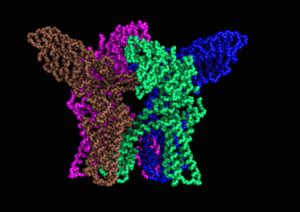
This collection of chemical and molecular structures has been assembled to help students explore chemicals that elicit a sense of heat and/or pain by binding certain receptors. All the chemical and molecular structures below can be viewed in Molecule World on the iPad or Molecule World for iPhone.
Displaying 1 - 7 of 7
| Type | Structure Description | PDB ID | Download Structure | |
|---|---|---|---|---|
| An MW Collection | Image
|
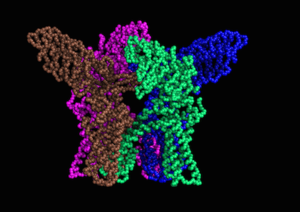
Receptors for capsaicin and wasabi, and capsaicin, wasabi, and spider toxin. Use the link on the right to download all the structures at once. |
Document
hot_stuff.mwc
(646.53 KB)
|
|
Image
|
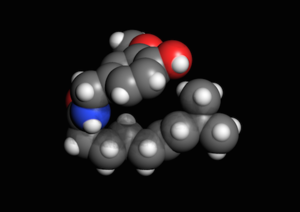
Capsaicin is a chemical made by chili peppers that contributes to a sensation of heat. |
Document
capsaicin.sdf.gz
(2.21 KB)
|
||
| MMDB | Image
|
Capsaicin receptor, also called the TrpVI Ion channel. |
3J5P | Document
3J5P.cn3
(930.68 KB)
|
| MMDB | Image
|
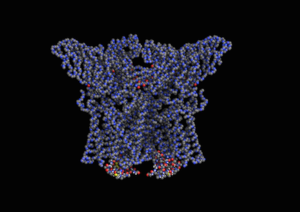
Capsaicin receptor bound to spider toxin. |
3J5Q | Document
3J5Q.cn3
(867.66 KB)
|
| MMDB | Image
|
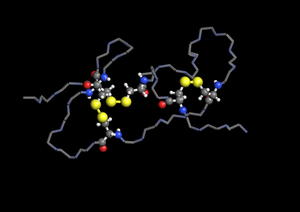
The "double-knot" spider toxin binds to the TrpV receptor and causes a sensation of heat and pain. |
1I25 | Document
Huwentoxin.cn3
(30.75 KB)
|
| MMDB | Image
|
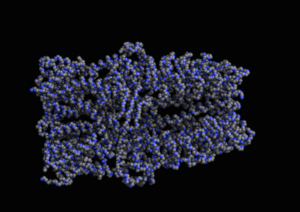
TrpA1 ion channel. Allyl isothiocyanate from wasabi binds to this receptor and causes a sensation of heat and pain. |
3J9P | Document
3J9P.cn3
(1.21 MB)
|
Image
|
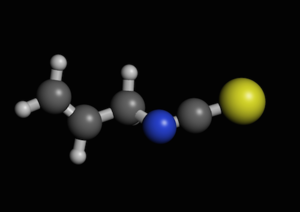
Allyl isothiocyanate is the chemical in wasabi that creates a sensation of heat. |
Document
allyl_isothiocyanate.sdf.gz
(872 bytes)
|