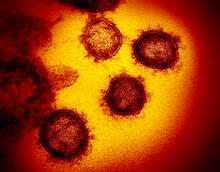
SARS-CoV-2 remains a relevant topic for bio database development. According the the NAR database compendium, and our research, at least 25 SARS-CoV-2 data resources are available to the public. Their Immunoprofiling: How it works specialized topics include immunology, genomics, RNA, proteins, drugs, and SARS-CoV-2 / COVID-19 literature. This post explores the CoV-AbDab database as a resource for studying how antibodies neutralize the virus to protect against serious disease.
What's in a test? Or better yet what's in 55 SARS-CoV-2 / COVID-19 molecular diagnostic tests? Plenty. 55 FDA EUAs indicate that nine different test formats are used, ranging from RT-PCR, to digital PCR, to isothermal amplification, to LAMP with a CRISPR enzyme.
The numbers of SARS-CoV-2 / COVID-19 diagnostic tests are exploding. These tests detect either viral RNA or antibodies to virus particles. But, which is best? That, of course, depends on what question is being asked.
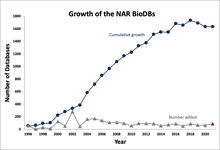
This year, I'm a little late with my post on the Nucleic Acids Research (NAR) database issue. While I was procrastinating, a pandemic broke out. So, unsurprisingly, this year's database topic is viruses. The NAR archive lists more than 32 databases related to viruses. Of these, 22 are still operational and five of the databases have information about SARS-CoV-2.
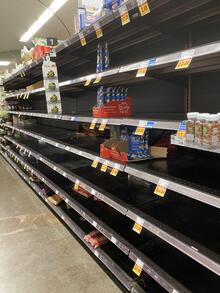
Our schools are closed. The farmers market is suspended. Spring sports are not happening. And our grocery stores look like this: Like many residents, I'm torn between enjoying the sun, or anxiously pacing around the house and getting teary eyed over the #SeattleWeGotThis hashtag on Twitter . The historians say ...
This October (9-11, 2019), I attended the 3rd NIBLSE conference entitled: "Integration of Bioinformatics into Life Science Education: Roadmap for the Future." It was held at " Hot Shops" in Omaha Nebraska, a space for artists to work, sell, and meet.
A recent article from STAT news (1) relayed the story of Jaci, a young woman in Iowa dying from a rare form of ALS, and her parents heroic efforts to help her get access to an untested drug. Interestingly, the drug is an antisense oligonucleotide. Antisense oligos are short pieces ...
Immuno-biotechnology an important field of biotechnology. With the advent of advanced DNA sequencing, and other technologies, immuno-biotechnology has significantly increased the use of computing technologies to decipher the meaning of large datasets and predict interactions between immune receptors (antibodies / T-Cell receptors / MHC) and their targets. Progress toward developing an immuno-bioinformatics course with Shoreline Community College is summarized in the attached presentation.
In early April 2019, the Institute for Systems Biology (ISB, Settle WA) hosted its 18th annual symposium. This year's theme focused on translational biology, which is the practice of commercializing research discovery. Over the two-day symposium, the audience was informed about the latest in the research and development of new ...
It would be unfair to teach an advanced bioinformatics class without getting into the weeds of command line interfaces (CLIs), heading, tailing, greping, and wc-ing files, piping programs together, and running a bioinformatics program and working with its output. Hence, in the final component of the immuno-bioinformatics class that we [Digital World Biology] are developing for Shoreline Community College will use cloud computing in the CyVerse environment to run IgBLAST.
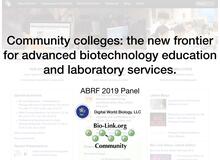
Back in March, we [Digital World Biology, Bio-Link.org, and the AC2 Bio-Link Regional Center] hosted a panel discussion at the ABRF annual meeting to introduce community colleges to ABRF and vise versa. I am pleased to report that the session was a great success.
I always look forward to sharing the Nucleic Acids Research (NAR) database issue. This year's blog topic is immunology. The NAR archive lists 31 immunologic databases, but only seven or so are active, and others are not listed in the NAR archive. Read the blog learn more.
Bioinformatics is full of unexpected adventures. Some are related to data discoveries, but many more are related to navigating the maize of software needed to implement a solution.
DNA sequencing-based immunoprofiling quantitatively measures AR diversity in samples by determining the sequences of V(D)J junctions. AR receptor diversity is vast due to a combinatorial rearrangement process that inserts a variable number of random DNA bases at each junction. In the sequencing process V(D)J junctions are amplified with V and J gene specific primers and, to be quantitative, differences in amplification rates that are due to primer sequences must be factored into each assay.
Immunoprofiling is the quantitative measurement of antigen receptors (ARs; antibodies or T-cell receptors) in a sample and is a hot area in biotechnology. Immunoprofiling is used to assess the diversity of antigen receptors (ARs: antibodies and T-Cell receptors) and how this diversity changes in response to allergens, infections, or vaccines. In cancer therapy, Immunoprofiling is used to develop biomarkers and understand how an individual’s immune cells fight tumors, and predict individuals' response to immunotherapy.
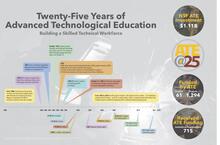
Last week I attended my first NSF ATE PI meeting. As a contributing member of Digital World Biology's ATE project entitled " A Bridge to Bio-Link's Future," I participated in the conference by preparing and staffing our booth in the first evening's showcase.
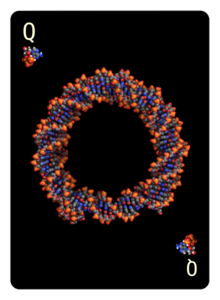
A fun thing we can do with molecular models is to create art. In Molecule World™, the residue coloring option applies a different color to each amino acid and nucleotide. When we're characterizing a protein and trying to understand its function, the residue coloring option helps us identify repetitive or ...
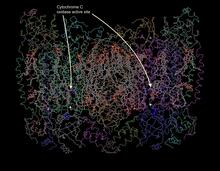
Cytochrome C oxidase is a molecule that none of us air-breathing creatures can live without. It's also really interesting. This protein complex is a dimer of two smaller complexes. Each of the smaller complexes contains 13 different proteins and two heme groups. The two heme groups are both part of ...