October is a month of darkness, mystery, and dread. Only one holiday brings joy in October and even then, October joy is distilled through fear and apprehension. In the early evenings the sun hurries home and once familiar objects loom ominously in the dark. Giant spiders appear out the fog ...
When purified, it glows with an unearthly light. You can't go "chemical free" and try to escape it. It's part of our bones and it forms the backbone of our DNA. A tool for good, a tool of war, essential for gardening, and infamous as a pesticide; phosphorus is truly ...
Reposted in honor of the holiday. What's it like when you work in the lab on Halloween? It started out innocently enough. "Go get some BHK cells," he said, "then transform the cells with these plasmids and use G418 to kill the cells that didn't get transformed." Cautiously, I ventured ...
Strange things happen when it's Halloween week in the lab. ( reposted in honor of Halloween) Catch up on the story by reading part I. I came back the next day, hoping to see dead cells in the culture dish. Quickly, I pulled the dish from the incubator. Yikes! Yellow ...
What strange things happen in the lab on Halloween? Read part I and part II to find out what's going on. ( Reposted in honor of Halloween) "All those beauties in solid motion All those beauties, gonna swallow you up Hi hi hi hi hi hi One time too many ...
Reposted from Halloween 2006. Since Ben shared his family's taxonomy of candy types, and it's Friday, after all, I thought I'd share some of things that we do with candy around our house and describe some fun things that you can do with candy at home. Materials and methods. First ...
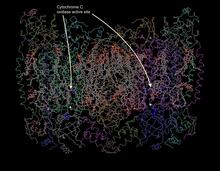
Cytochrome C oxidase is a molecule that none of us air-breathing creatures can live without. It's also really interesting. This protein complex is a dimer of two smaller complexes. Each of the smaller complexes contains 13 different proteins and two heme groups. The two heme groups are both part of ...
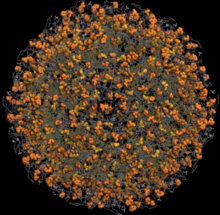
A fun thing we can do with molecular models is to create art. In Molecule World™, the residue coloring option applies a different color to each amino acid and nucleotide. When we're characterizing a protein and trying to understand its function, the residue coloring option helps us identify repetitive or ...